



China’s Ambitious Embodied AI Revolution in Robotics
A comprehensive look at the nation’s strategy to fuse artificial intelligence with physical robots and its ripple effects across global industry.
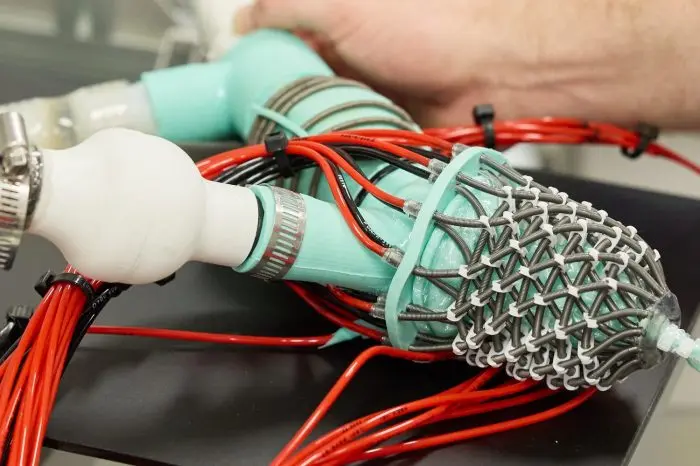
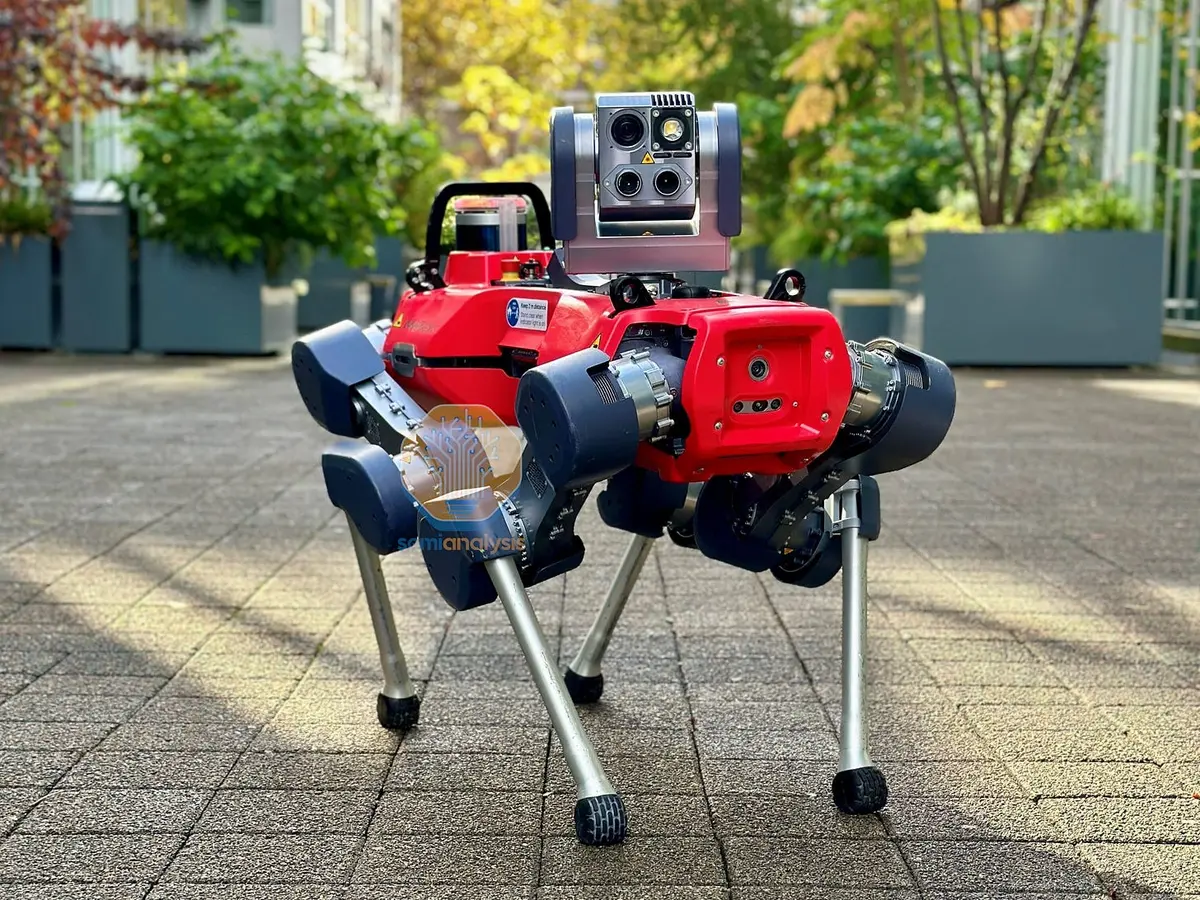
China’s ambitious path to transform its robotics industry is rooted in a strategic vision that blends cutting‑edge artificial intelligence (AI) with the physical capabilities of robots, a concept known as embodied AI. The term, coined by researchers at the Mercator Institute for China Studies (MERICS), highlights how the Chinese government is not merely developing autonomous systems but embedding them into tangible machines that can perceive, reason, and act in real‑world environments.
**The policy backdrop**
Since the launch of “Made in China 2025” in 2015, the Chinese state has systematically prioritized high‑value manufacturing sectors. In 2019, the Ministry of Industry and Information Technology (MIIT) unveiled a new “Intelligent Manufacturing” framework that explicitly ties AI development to industrial automation. These policy documents declare a national goal: to have 30% of manufacturing processes controlled by autonomous robots by 2030, with AI as the core enabler. The Chinese Academy of Sciences (CAS) and the State Administration of Science, Technology, and Industry for National Defense (SASTIND) have also issued guidelines for “smart factories,” encouraging enterprises to integrate AI‑powered robotic arms, drones, and collaborative robots (cobots) into production lines.
**Capital and talent pipelines**
To support this vision, China has channeled roughly US$12 billion in 2023 alone into robotics R&D, a figure that dwarfs the US’s annual investment of US$5 billion in the same field. The government’s “Double 2030” initiative (doubling R&D spending and talent output by 2030) has led to the creation of 1,200 AI‑robotics research institutes, including the China Academy of Engineering Robotics and the Shanghai Institute of Intelligent Machines.
**Industry players and ecosystem**
The domestic landscape is populated by a mix of state‑owned giants and dynamic start‑ups.
* **UBTECH** – Founded in 2012, UBTECH has become the world’s largest provider of humanoid robots for education and entertainment, leveraging edge‑AI processors to enable real‑time speech and gesture recognition. In 2024, UBTECH announced a partnership with Baidu’s Apollo AI platform to develop service robots capable of navigating complex indoor spaces autonomously.
* **DJI** – Though best known for drones, DJI’s recent entry into warehouse robotics demonstrates the company’s ambition to extend its vision‑based AI to full‑scale material handling. The company’s new “Sky‑Pick” autonomous palletizer uses LiDAR‑based perception and a neural‑network controller to perform high‑speed picking in e‑commerce fulfillment centers.
* **Sinomach Robotics** – A subsidiary of the China National Machinery Industry Corporation, Sinomach has been a pioneer in heavy‑industry robotics. Its “Robotic Crane 2.0” integrates deep‑learning vision systems for precision cable handling in offshore wind farms.
* **Baidu, Tencent, and Alibaba** – These tech giants are investing heavily in AI infrastructure (e.g., Baidu’s Apollo, Tencent’s AI Lab, Alibaba’s ROS‑based robot operating system) to create a seamless ecosystem where cloud‑based AI services feed real‑time data to on‑board robotic systems.
* **Start‑ups** – Companies such as **Kangaroo Robotics** (autonomous mobile robots for campus logistics), **Giant Robotics** (AI‑augmented exoskeletons for construction), and **OpenAI Robotics China** (collaborative AI‑robotic platforms for health care) illustrate the breadth of the sector’s innovation.
**Technological breakthroughs**
The core of embodied AI lies in the convergence of three pillars: perception, cognition, and actuation.
1. **Perception** – China’s domestic AI labs have produced state‑of‑the‑art vision models that can operate in low‑lighting environments, critical for night‑shift factories. For instance, the “Vision‑Edge” platform by the Institute of Automation, Chinese Academy of Sciences can process 300 frames per second on a single 12‑core CPU, outperforming many Western solutions.
2. **Cognition** – Reinforcement learning algorithms trained on simulated environments have allowed Chinese robots to optimize path planning in cluttered spaces. A 2023 study published by Shanghai Jiao Tong University showed that their “Sim‑2‑Real” transfer pipeline reduced real‑world training time by 70% for warehouse robots.
3. **Actuation** – Innovations in soft‑robotics materials and high‑torque actuators have enabled the development of collaborative robots that can safely work alongside humans without heavy shielding. The “Soft‑Grip” arm by Shenzhen Soft Robotics Ltd. can apply variable force profiles, making it ideal for delicate tasks such as pharmaceutical packaging.
**Economic and geopolitical implications**
China’s rapid scaling of embodied AI threatens to tilt the global balance in several domains:
* **Manufacturing** – By 2030, Chinese factories could automate up to 40% of tasks currently done by human workers, potentially displacing 10 million low‑skill jobs worldwide while creating a new high‑skill labor market.
* **Logistics** – Autonomous delivery drones and self‑driving forklifts could cut shipping costs by up to 15% for major retailers, shifting the logistics landscape in Asia and Europe.
* **Defense** – The same AI‑driven robotic platforms that serve industry are being adapted for military logistics, surveillance drones, and unmanned ground vehicles, raising concerns in NATO circles about an emerging “robotic arms race.”
* **Supply chain resilience** – The COVID‑19 pandemic highlighted the fragility of global supply chains. China’s push for embedded AI in manufacturing and logistics could reduce dependency on imported components and boost domestic resilience, prompting other countries to accelerate their own initiatives.
**Brazilian and Latin‑American perspective**
Latin America is witnessing a modest but growing robotics market, with Brazil and Mexico leading in industrial automation. Brazilian automakers like **Nissan Brazil** and **Volkswagen Brazil** have begun deploying collaborative robots in assembly lines to meet stringent quality standards. However, the region lags behind China in both R&D investment and talent pool.
A recent report by the Brazilian Robotics Association (ABRRA) estimates that Latin America will need an annual investment of US$5 billion by 2030 to catch up, primarily in AI training data, edge computing infrastructure, and workforce upskilling. Brazilian policy makers have begun drafting a “Robotics and AI National Strategy” that echoes China’s policy framework, aiming to integrate AI into agriculture, mining, and logistics.
The region’s proximity to China offers both opportunities and risks. On one hand, Chinese robotics companies are actively expanding into Latin America, offering affordable, AI‑powered solutions for small and medium enterprises. On the other hand, overreliance on Chinese technology could expose critical infrastructure to geopolitical leverage. Latin American governments are therefore exploring bilateral agreements with US and European partners to diversify their robotic supply chains.
**Conclusion**
China’s embodied AI strategy represents a deliberate, multi‑layered approach that blends state policy, massive investment, and a vibrant ecosystem of firms. The convergence of AI and robotics promises to transform manufacturing, logistics, defense, and consumer markets, while also reshaping labor markets and geopolitical dynamics. Latin America, and Brazil in particular, faces a crossroad: whether to harness China’s technological momentum to accelerate industrial modernization or to diversify its partnerships to mitigate potential geopolitical risks. As the world watches, China’s embodied AI push will likely serve as a benchmark for the next generation of intelligent machines.
Fonte original
Google News — Robótica China (EN)